Do You Need Title Insurance When Buying a Home?
Oct 12, 2026 · @William Holder
Short answer: if you're getting a mortgage, you'll be required to buy a lender's title policy — that part isn't optional. The owner's policy, which actually protects you, is technically optional, but it's the one I'd never skip.
Title insurance is a one-time cost at closing that protects you from problems buried in a property's ownership history — old liens, record errors, even fraud. Because it's a single premium for coverage that lasts as long as you own the home, it's quietly one of the best values on the closing statement.
What title insurance actually protects you from
Most insurance covers things that might happen in the future — a fire, a storm, an accident. Title insurance is the opposite: it protects you from problems that already exist in a property's past but haven't surfaced yet.
When you buy a home, you're buying its entire ownership history along with it. If something in that history is wrong, it can become your problem — even if you had nothing to do with it. Title insurance covers issues like:
Unpaid liens or back taxes left by a previous owner
Errors or omissions in public records and past deeds
Forgery or fraud somewhere in the chain of ownership
A missing or undisclosed heir who claims an interest in the property
Boundary disputes and undisclosed easements
Before closing, a title search looks for these problems and most get cleared up. But no search is perfect, and some issues are genuinely hidden. Title insurance is what stands between you and a costly surprise if one of them turns up years later — including paying to defend your ownership in court.
Lender's policy vs. owner's policy
This is the distinction that trips most buyers up, and it's the whole answer to "do I need it?"
There are two separate policies, and they protect two different people:
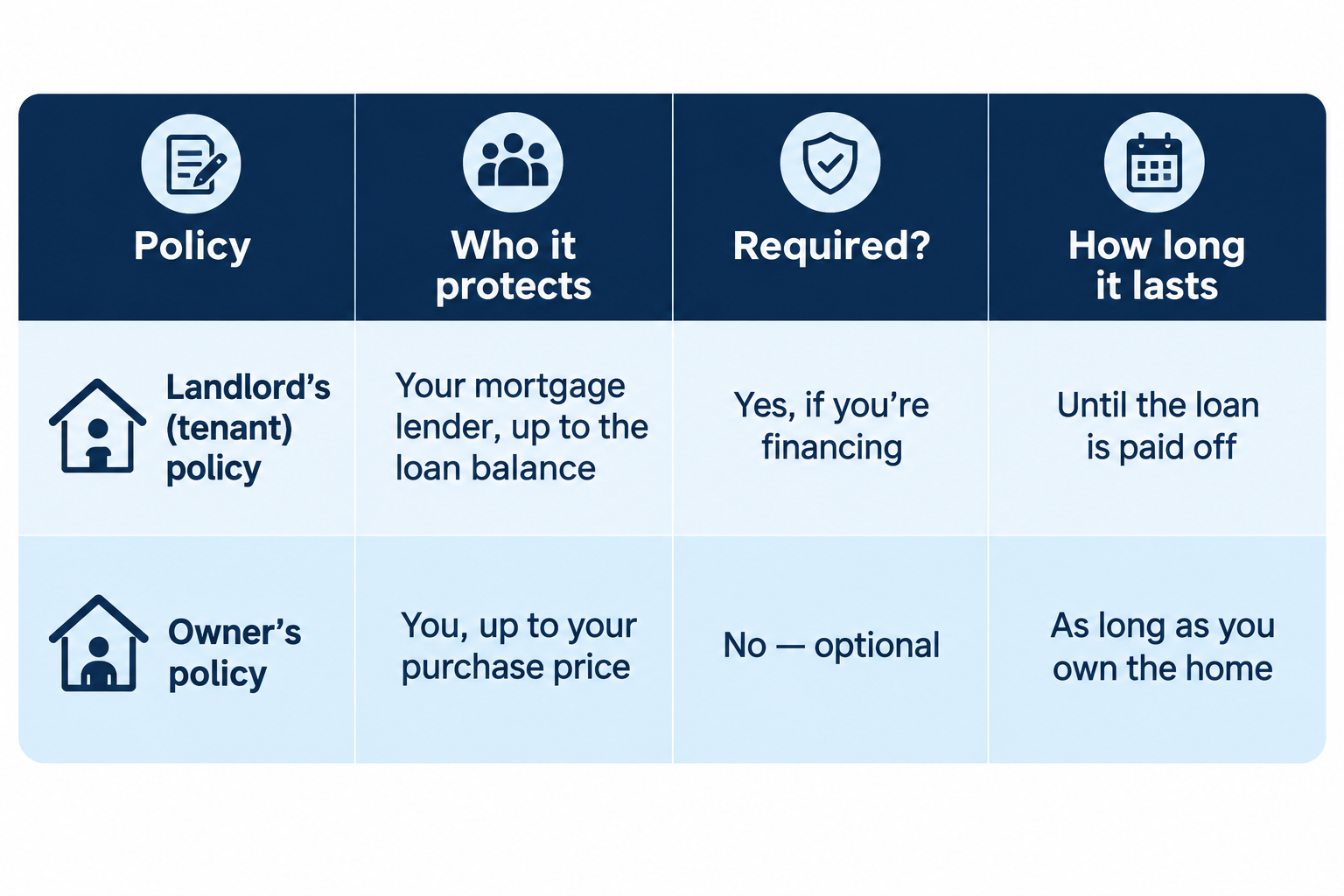
Here's the catch people miss: the lender's policy you're required to buy protects the bank, not you. If a title problem wiped out your ownership tomorrow, the loan policy would make the lender whole — and leave you with nothing.
The owner's policy is the one that protects your money and your ownership. It's optional, but skipping it to save a few hundred dollars means leaving your largest asset uninsured against exactly the kind of problem title insurance exists to cover.
So do you actually need it?
It comes down to how you're buying:
If you're financing: You don't have a choice on the lender's policy — your lender requires it, and it's a standard part of your closing costs. The owner's policy is still optional, but this is where I tell every client the same thing: buy it. You're already at the closing table, the cost is modest, and it's the only piece protecting your side of the deal.
If you're paying cash: Nobody requires you to buy anything — which is exactly why cash buyers sometimes skip it and regret it. With no lender in the picture, an owner's policy is the only title protection you'll have. I'd consider it essential, not optional.
One common misconception: "It's new construction, so the title must be clean." Not necessarily. New homes can carry unpaid contractor liens, and the land itself has a history. New construction is not a reason to skip coverage.
The simple way I put it: a lender's policy protects the bank's money, and an owner's policy protects yours. You want both.
What it costs — and how it works around here

Title insurance is a one-time premium paid at closing, based on your purchase price, with no monthly bill ever again. For coverage that lasts as long as you own the home, it's one of the better values on the settlement sheet.
Here's something most buyers in Pennsylvania don't realize: title insurance rates are set at the state level. The premium for a given price is essentially the same no matter which title company you use. So you're not shopping on price — you're choosing on service, accuracy, and how smoothly your closing runs. A sloppy title company can delay or derail a settlement; a good one makes it a non-event. New Jersey and Delaware regulate their rates too, so the same principle largely applies across our markets.
Full disclosure: this is a world I live in. I own Classic Settlements, our settlement company, which is a big part of why I care so much about this step being done right. When the title and settlement side is handled well, buyers barely notice it — and that's exactly the point.
In Pennsylvania the buyer typically chooses the title company, so it's worth asking your agent who they trust to close cleanly.
Frequently asked questions
Is title insurance required to buy a house? The lender's policy is required if you're financing. The owner's policy — the one that protects you — is optional, but strongly recommended whether you're financing or paying cash.
What's the difference between lender's and owner's title insurance? The lender's policy protects your mortgage lender up to the loan balance. The owner's policy protects you up to your purchase price and lasts as long as you own the home. They're separate policies covering different people.
How much does title insurance cost? It's a one-time premium at closing based on your purchase price. In Pennsylvania the rate is set at the state level, so it's essentially the same across title companies — you choose on service, not price.
Do I need title insurance if I'm paying cash? It's not required, but it's arguably more important — with no lender involved, an owner's policy is your only title protection. I'd treat it as essential.
Do I need it on new construction? Yes. New homes can carry unpaid contractor liens, and the land has its own history. "New" doesn't mean the title is automatically clean.
Questions about your closing? Let's talk
Title and settlement is the part of a purchase most buyers never think about — until it goes sideways. It's also the part I know inside and out. If you're buying in Delaware County, South Jersey, or Delaware and want to understand your closing costs or make sure the title side is handled right, I'm glad to walk you through it.
Call or text me directly at 484-744-4053 and we'll make sure nothing gets missed.